Background to this issue
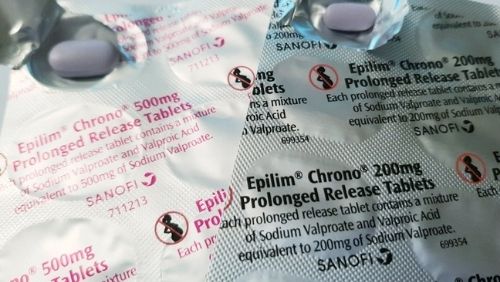
Sodium Valproate (Epilim) is a commonly used epilepsy drug which was first licensed in Ireland in 1975. However, since the 1960s, evidence was emerging that the drug could have a severe impact on the unborn child if prescribed in pregnancy.
Approximately 30–40% of children exposed to valproate in utero will have some form of neurodevelopmental disorder (this includes developmental delay, autism spectrum disorder and ADHD).
Exposure to valproate in utero is also strongly associated with major congenital malformations. This includes neural tube defects such as spina bifida, cleft lip and palate, cardiovascular defects, and limb anomalies. Studies indicate that the risk is around 10%, significantly higher than the baseline population risk.
When a child has been confirmed as having been exposed to valproate - and where no other genetic cause can be found for the disabilities/conditions they are experiencing - they are diagnosed with a condition known as Foetal Valproate Spectrum Disorder (FVSD).
Despite the effects of valproate and developing evidence over several decades, it was not until 2014 and again in 2018 that significant measures were taken to warn women of childbearing age about the potential impacts of the drug. In the years since it was first licensed in Ireland, many women continued to be prescribed valproate with no warnings.
The HSE estimate that up to 1,250 families may have been impacted by exposure to valproate over the past 50 years - with many requiring significant care and tailored supports.
What did we want?
Working with our colleagues in OACS Ireland - the organisation that represents families caring for children/adults who were exposed to Sodium Valproate in-utero and who are now living with a range of disabilities as a result, we approached the campaign through the lens of the Past, Present and Future.
- The Past
Although evidence was emerging from the 1960s onwards that valproate could have a teratogenic impact if prescribed in pregnancy, it was only in the mid-late 2010s where targeted efforts were made to warn patients directly of the risks via the development of the Pregnancy Prevention Programme (PPP) for women of childbearing age on the medication. In the intervening period, thousands of women were prescribed the medication with no warnings or insufficient warnings and as a result, are now caring for children with a range of severe disabilities. The question these families have is why this was allowed to happen. Working alongside OACS Ireland, we believed that these questions could only be answered by a state inquiry, and this became a key element of our advocacy efforts. - The Present
As the representatives of the families impacted, OACS Ireland led on advocating for the necessary services to be put in place for children who had been impacted by exposure and are living with a range of disabilities. - The Future
It is important to highlight that Sodium Valproate continues to be a very effective anti-seizure medication. For some people living with epilepsy, it may be the only medication that has given them seizure control. However, despite efforts to address the risks in pregnancy, including the introduction of a strengthened PPP in 2018, evidence suggests that significant gaps in awareness persist. Surveys conducted by Epilepsy Ireland, together with research studies involving healthcare professionals, have consistently found ongoing insufficient awareness of the potential risks - both among women who may be taking the medication and among the healthcare professionals who prescribe it. There is still a risk that a child could be exposed to valproate today. For this reason, we campaigned for the establishment of a Sodium Valproate Stakeholder Group to assess the current risk reduction measures, and to recommend and implement measures that could be taken to reduce these risks. We also campaigned for adequate staffing and resourcing to enable clinical teams to properly counsel women on the risks of the medication and to meet the obligations of the PPP. This would help to prevent anyone being impacted by exposure to Sodium Valproate in the Future.
Our work in campaigning for a state inquiry and addressing what happened in the past is also critical for shaping the future care of women with epilepsy. Dozens of anti-seizure medications are currently available, with more likely to emerge in the coming years. It is therefore essential that we learn from past experiences to ensure that data is proactively generated, that patients receive accurate and timely information, that the state responds promptly to emerging evidence, and that clinicians are adequately resourced to counsel their patients effectively.
What did Epilepsy Ireland do?
Working alongside our colleagues in OACS Ireland since 2013, we advocated amongst policy makers, Oireachtas members and in the media for commitments to the measures outlined above.
This led to:
- A Government commitment to a non-statutory inquiry in November 2020. Terms of Reference for the Inquiry were agreed in July 2023. An independent chairperson for the inquiry was appointed in July 2024; and the inquiry officially got underway in July 2025.
- A Stakeholder Group was established by the Minister/ Department of Health to assess and strengthen current risk reduction measures associated with the medication in December 2022.
- Funding was secured by the HSE to recruit three outstanding epilepsy nurse specialists in December 2022 - these nurses’ primary role would be to add additional capacity to help with the implementation of the Pregnancy Prevention Programme. These additional roles had been recommended since 2018.
Conclusion
While work is continuing in this area e.g. the ongoing Sodium Valproate inquiry and the Sodium Valproate Stakeholder group, there have been significant state commitments and progress made, thanks to our collaborative campaigning alongside OACS Ireland. We are confident that our efforts will lead to significant positive developments in the future care of women with epilepsy in Ireland.
Achieving these results would not have been possible without the support of our members and volunteers, who helped amplify the issue with their local TDs and Senators at every opportunity. A huge thank you to everyone involved in helping us secure these significant commitments.
Thank you also to all TDs and Senators who raised the valproate issue over the years. A special mention to Deputy Rose Conway-Walsh who has been a tireless advocate for those affected, and to former Minister Stephen Donnelly for his leadership in securing Government support for the establishment of the inquiry and other measures.
Finally, at the heart of our work over the past decade on this matter are the families whose lives have been profoundly impacted by exposure to sodium valproate. It has been a privilege to work alongside them. Despite the most challenging circumstances, these families have been tireless advocates throughout this continuing campaign and we would like to thank them for all their assistance and support.
News Updates
Below are some of the updates on this matter as it progressed and associated articles in the news section of our website and some associated press coverage where you can read more.
- June 2026 - Epilepsy Ireland address Sodium Valproate inquiry
- March 2026 - Minister for Health provides update on Sodium Valproate inquiry
- February 2026 - Epilepsy Ireland make Sodium Valproate Inquiry Submission
- September 2026 - Sodium Valproate Inquiry Update (2025)
- July 2025 - Sodium Valproate Inquiry Officially Begins
- June 2024 - Appointment of Sodium Valproate Chair welcomed in Dáil
- June 2024 - Chair Appointed for Sodium Valproate Inquiry
- June 2024 - Irish Independent; Barrister appointed to chair long-awaited inquiry for use of epilepsy drug linked to birth defects
- June 2024 - Irish Medical Times; Chair appointed to epilepsy drug inquiry
- June 2024 - RTÉ News; Inquiry into prescribing of anti-epilepsy drug to be established 'within weeks'
- June 2024 - Gov.ie; Minister for Health announces Chair of inquiry into historical use of sodium valproate in certain groups of women
- April 2024 - Sodium Valproate Inquiry Chair Update
- February 2024 - UK Report recommends Redress for people impacted by Sodium Valproate
- July 2023 - Journal.ie; Non-statutory inquiry into prescribing of drug that causes birth defects approved by Cabinet
- July 2023 - Irish Independent; Women whose babies were born with complications from epilepsy drug ‘reluctantly’ agree to non-statutory inquiry
- July 2023 - Gov.ie; Minister for Health secures Government approval for inquiry into historical use of sodium valproate in certain groups of women
- July 2023 - Statement from OACS Ireland and Epilepsy Ireland on cabinet approval for non-statutory inquiry into historical licensing and prescribing of Sodium Valproate
- March 2023 - Sodium Valproate Inquiry delays raised in the Dáil
- March 2023 - Families urge Donnelly to hold inquiry into use of epilepsy drug during pregnancy
- March 2023 - Irish Times; Solicitor calls for redress scheme to avoid ‘perpetual litigation’ over anti-epilepsy drug
- March 2023 - RTÉ; Court approves two settlements over epilepsy drug use
- March 2023 - Irish Examiner; Boy with autism settles for €15m over use of epilepsy drug during mother's pregnancy
- March 2023 - Irish Independent; Boy (13) with autism who sued over failure to inform his mother of epilepsy treatment risks during pregnancy settles for €15m
- March 2023 - Irish Examine; Siblings' family take cases over prescribing of valproate during pregnancy
- February 2023 - OACS Ireland; Oacs Ireland write to Minister for Health regarding inquiry.
- December 2022 - Families affected by prescribing of sodium valproate in pregnancy call for inquiry
- December 2022 - Sodium Valproate Campaign Update
- November 2022 - Irish Examiner; €12m epilepsy drug settlement in High Court could open floodgates to dozens more cases
- November 2022 - RTÉ.ie; €12m settlement for boy who suffered severe neurological damage
- November 2022 - Irish Times; Settlement of €12m for teen allegedly damaged by seizure control drugs during pregnancy
- November 2022 - Boy with autism who sued over epilepsy drug taken during mother's pregnancy settles for €12m
- November 2022 - RTÉ.ie; Epilepsy drug caused baby's neurological damage, court told
- November 2022 - Irish Examiner; Families affected by anti-epilepsy drug should be given 'no fault redress scheme'
- November 2022 - Irish Examiner; 'I took them and he's the one suffering' says mother prescribed anti-epilepsy pill when pregnant
- October 2022 - Irish Examiner; First sodium valproate injury case opens next month
- September 2022 - Epilepsy Ireland & OACS Ireland meet with Minister for Health regarding Sodium Valproate Inquiry
- September 2022 - Irish Examiner; Families to consider terms of inquiry into controversial epilepsy drug
- August 2022 - Irish Examiner; Families want answers on epilepsy drug that can damage babies in the womb
- August 2022 - Irish Independent publish Documentary on Valproate families
- August 2022 - Irish Independent; The Valproate Families: The stories of the families affected by Sodium Valproate in Ireland
- August 2022 - Epilepsy Ireland & OACS Ireland to meet with Minister for Health regarding Sodium Valproate Inquiry
- August 2022 - Irish Independent; Concern over State’s inaction on drug known to have caused birth defects
- June 2022 - Sodium Valproate Inquiry Update.
- June 2022 - Sodium Valproate Inquiry Update.
- May 2022 - Irish Examiner; Minister 'committed' to inquiry into drug linked to neurological problems in 1,500 children
- May 2022 - Minister for Health Questioned on establishment of promised Sodium Valproate inquiry
- May 2022 - Outstanding Valproate Commitments raised in Dáil and media.
- April 2022 - The Journal.ie; Timeframe still not decided for inquiry into epilepsy drug that can cause birth defects
- April 2022 - UK coverage outlines why outstanding valproate related commitments must be prioritised in Ireland
- October 2021 - Sodium Valproate campaign raised during Leaders Questions in Dáil Éireann
- September 2021 - New Irish study finds that ‘continued effort is needed’ in reducing valproate risks
- August 2021 - Epilepsy Ireland & OACS Ireland urge Minister to act immediately on Sodium Valproate commitments.
- July 2021 - Sodium Valproate (Epilim) Inquiry delay raised in the Dáil
- November 2020 - Minister for Health to establish inquiry into historical licensing & use of Sodium Valproate in pregnancy
- November 2020 - Department of Health; Minister for Health commits to inquiry into anti-epilepsy drug sodium valproate
- November 2020 - Epilepsy Ireland & OACS Ireland to meet with Minister for Health regarding Sodium Valproate
- October 2020 - Epilepsy Ireland & OACS Ireland to meet with Minister for Health regarding Sodium Valproate
- September 2020 - Epilepsy Ireland & OACS Ireland seek response from Minister Donnelly regarding Independent Inquiry on Sodium Valproate
- July 2020 - Letter to Minister for Health, Stephen Donnelly regarding IMMDS UK inquiry
- July 2020 - New Government face demands for Independent Inquiry from families impacted by Sodium Valproate (Epilim) in Ireland
- July 2020 - Statement from Epilepsy Ireland on Sodium Valproate Survey Findings
- July 2020 - Survey results on the awareness of risk factors associated with Sodium Valproate (Epilim)
- July 2020 - Non-Statutory Inquiry publishes long awaited "Cumberlege Review" in the UK
- May 2019 - Sodium Valproate – New videos on the risks in pregnancy
- Sept 2017 - Karen Keely's presentation to the European Medicines Agency
Further information
- To learn more about the Sodium Valproate Pregnancy Prevention Programme, visit the 'Sodium Valproate' section of our website
- Further information on OACS Ireland can be found by visiting the OACS Ireland website . If you believe you have been impacted by Sodium Valproate, please reach out to them.
- If you are hearing about Sodium Valproate for the first time, see our section on why an inquiry was announced in November 2020.
- To learn more about the Sodium Valproate Inquiry, visit the Sodium Valproate Inquiry website.