
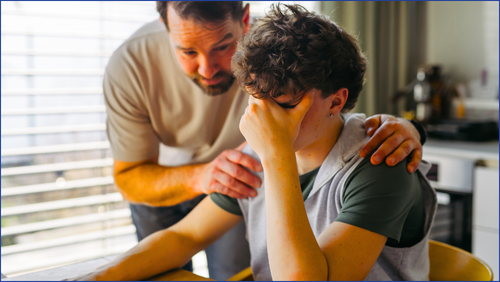
If you are reading this section of our site because you have concerns about someone’s mental or emotional wellbeing, you may find the following simple steps useful. This will help you understand the person’s distress and keep the person safe until professional help is available.
Assess risk of suicide or self-harm
- Talk to the person and find out how they are feeling and what is making them feel this way.
- Identify if that person is at risk by asking them directly if they have suicidal thoughts.
- If yes, allow the person to talk about why they want to end their life. Then try to explore their reasons to live.
- Explore and asses if there is an immediate risk of suicide.
- Find out if they have attempted suicide in the past.
- Do they have any support? Anyone who has previously tried to end their life by suicide and has no support is more at risk.
- Try to disable the person’s suicide plan by, for example, taking away any pills the person intends to take.
- Agree a safe plan of action that keeps the person safe until they get professional help. This could be agreeing with them that they will phone their doctor, or if appropriate, offer to do this for them.
Listen non-judgmentally
If you have established that there is a risk of suicide, take some time to listen to the person. Don’t be critical, don’t express your own frustration, don’t offer advice such as ‘pull yourself together’. Avoid any confrontation unless this is necessary to prevent them from harming themselves or others.
Give reassurance and information
Mental health problems affect many people. Stress that people can and do recover from them. Reassure the person that this is not a sign of weakness. Help them to feel more positive by telling them that effective help is available from their doctor and/or counsellor.
Encourage the person to get appropriate professional help
Ask them to speak to their doctor if they haven’t already done so. If appropriate, offer to phone or go with them. Alternatively, give them the phone number of helplines such as, Samaritans, Pieta House, etc. We have included some of these helplines below: If they don’t seek help, don’t be afraid of taking charge of the situation. Call their doctor yourself.
- Call 999 or 112 to reach emergency services and request an ambulance if they have or are in danger of harming themselves.
- Pieta House – learn more by visiting their website or by calling 1800 247 247 or Text HELP to 51444
- Samaritans Ireland – learn more by visiting their website or by calling 116 123
- Aware – learn more by visiting their website or by calling 1800 80 48 48
- Text About It provides a safe space where you’re listened to by a trained volunteer, the service is free and provides 24/7 support by text. Text HELLO to 50808. Visit the 'Spunout' website for further information.
- Visit the Mental Health Ireland website, which has links to a range of community mental health support services