
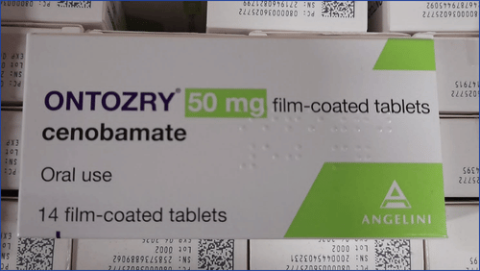
Following a review of emerging data by the European Medicine Agency (EMA), new safety information and additional monitoring requirements have been introduced for the Anti-Seizure Medication (ASM), Ontozry.
Ontozry – also known by its generic name cenobamate - is a medicine for treating focal-onset epileptic seizures (seizures starting in one specific part of the brain, including those that eventually spread to the whole brain). It is used as an add-on to other epilepsy medicines for adults with seizures that are not controlled.
A review of the current safety information associated with this ASM was prompted following reports of severe liver injury being reported in some patients treated with the medication.
While the exact causes and mechanisms on the link between Ontozry and potential liver injury remains unclear, following their review, the EMA has agreed that new safety information and additional monitoring are required.
This information has been recently communicated to Healthcare Professionals in Ireland through a ‘Direct Healthcare Professional Communication’ via the Health Products Regulatory Authority (HPRA).
A summary of the communication which has been issued to Healthcare Professionals is as follows:
- Cases of severe liver injury with hepatic failure have been reported in patients treated with Ontozry, many in the context of polytherapy with other anti-seizure medications.
- Liver function tests should be evaluated before initiation of Ontozry and liver function should be monitored during treatment.
- Prompt clinical evaluation and liver function tests should be performed in patients presenting with signs or symptoms indicating liver injury.
- Patients should be advised to immediately seek medical attention if they experience signs or symptoms suggesting liver injury.
- If liver injury is suspected or detected, dose reduction or discontinuation of Ontozry should be considered.
The safety notice highlights the following symptoms as being potentially indicative of liver injury: fatigue, anorexia, right upper quadrant abdominal pain, dark urine, or jaundice.
The safety notice can be read in full by visiting the ‘HPRA’ website or downloaded at the end of this article. You can also find further information on the EMA’s decision to introduce these measures by visiting the ‘European Medicine’s Agency’ website.
While we know these new measures may be concerning for people with epilepsy who are taking this medication, it is important to note that the new data suggests liver injury remains a rare side effect, which may occur in up to 1 in 1,000 people.
If you suspect that you or a loved one is experiencing signs or symptoms suggesting liver injury, you should seek medical attention immediately. PLEASE DO NOT stop taking the medication without first speaking with your prescriber.
It is also important to note that all medications carry potential risks and side effects and many people with epilepsy will report experiencing side effects from their ASMs. Discussing these with your treating medical team is very important.
You can also report potential side effects of medications directly to the HPRA. Reporting side effects is vital to help build a better understanding of the benefits and risks of all medications and to ensure that information provided to patients and Healthcare professionals is accurate. You can find further information on this by visiting the ‘Side effects’ page on our website.
As always, if you or a loved one need any information or support on your respective journey’s with epilepsy, please do not hesitate to contact your local Community Resource Officer. You can find their details by visiting the ‘Our Local Service’ section of our website.