We are delighted to announce that Epilepsy Ireland will fund three new research projects under our latest research funding call through the Health Research Board (HRB) and Health Research Charities Ireland (HRCI) Joint Funding Scheme.
These new investments bring our total epilepsy research funding to more than €2 million, marking a major milestone in our research journey, which began in 2010.
The awards are the result of our 9th Research Funding Call, which opened in July 2025. Under the HRB-HRCI Joint Funding Scheme, participating charities can submit a maximum of four projects for funding consideration, from which a maximum of three can be funded.
To ensure the strongest possible projects were put forward, Epilepsy Ireland undertook an extensive, independent and competitive selection process over the past year. The fact that the maximum three nominated projects were successful demonstrates not only the value of this rigorous approach but also the quality and expertise of our epilepsy research community in Ireland.
The projects receiving funding are:
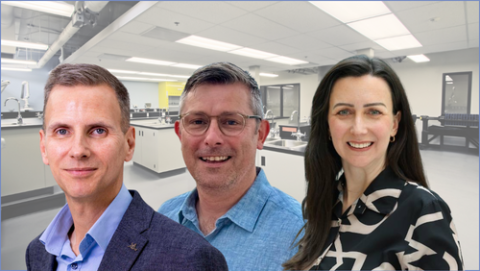
- MEG Assisted Planning for Intraoperative Targeting (MAP-IT), led by Professor Mark Cunningham of Trinity College Dublin. Total funding awarded: €233,286.61 (50% HRB, 50% Epilepsy Ireland).
- CONTACTS: Characterising Epilepsy Outcomes via Neurophysiological and Transcriptomic Analysis of StereoEEG Contacts, led by Professor David Henshall of FutureNeuro. Total funding awarded: €235,877.00 (50% HRB, 50% Epilepsy Ireland).
- DS-COMBINE: A Multi-Modal, Circadian-Informed Strategy for Personalised Care in Adults with Dravet Syndrome, led by Dr Cristina Reschke. Total funding awarded: €240,000.00 (50% HRB, 50% Epilepsy Ireland).
Each project represents an important and innovative area of epilepsy research and is led by internationally recognised experts in the field. A common theme across all three studies is the ambition to improve outcomes for people living with complex and difficult-to-treat epilepsy.
MAP-IT Project
Professor Cunningham's study will enhance surgical planning and precision by testing a new wearable brain-scanning technology to see if it can accurately identify the brain regions responsible for epileptic seizures in patients with brain tumours before surgery. If successful, the approach will help surgeons remove the seizure-generating brain tissue more precisely, while preserving as much healthy tissue as possible.
Commenting on the award, Professor Cunningham said:
This project brings together advanced brain imaging and brain-monitoring technologies with surgical decision-making. Our goal is simple: to improve our ability to identify the brain tissue responsible for seizures, helping to make epilepsy surgery more precise and ultimately more effective for patients. We are delighted to have the support of Epilepsy Ireland for this project and are grateful to everyone who has made this research possible.
You can learn more about this project by visiting the ‘Research’ section of our website.
CONTACTS Project
Professor Henshall's project will study traces of genetic material collected from brain electrodes used in epilepsy surgery assessments to improve understanding of how seizures emerge, spread and affect the brain.
In the longer term, the research aims to help doctors make more informed surgical decisions, improving the chances of seizure freedom for people with drug-resistant epilepsy. It could also potentially reveal new epilepsy biomarkers and contribute to the development of more targeted treatments,.
Speaking about the project, Professor Henshall said:
Understanding, diagnosing and treating brain disease is a scientific, health and societal priority. Treatment-resistant seizures affect one in three people living with epilepsy and are a major cause of disability and morbidity. We hope our investigations through CONTACTS will lead to better outcomes for these individuals and help bridge the treatment gap that currently exists for people living with difficult-to-treat epilepsies. The whole team cannot wait to get started and we are incredibly grateful to Epilepsy Ireland and its supporters for making this work possible.
You can learn more about this project by visiting the ‘Research’ section of our website.
DS-COMBINE Project
Dr Reschke's study will use home-based monitoring and biological testing to better understand why adults with Dravet syndrome - a rare genetic form of epilepsy -, experience severe sleep problems and persistent seizures despite treatment. It is hoped that the study will develop more personalised approaches to treatment, improve quality of life and lead to efforts towards reducing the risk of serious complications such as SUDEP.'
Speaking about the award, Dr Reschke said:
I am delighted to have the support of Epilepsy Ireland once again for this incredibly important research. The DS-COMBINE project is the first study to investigate how sleep, circadian rhythms, medication timing and biological activity interact in adults with Dravet syndrome. We believe these investigations can lead to improved outcomes for people living with this condition, and we look forward to beginning our work.
You can learn more about this project by visiting the ‘Research’ section of our website.
We wish all three research teams every success as they prepare to begin their work, with projects commencing between October 2026 and February 2027. We look forward to working closely with each team and sharing updates on their progress in the years ahead.
Reflecting on the success of the latest funding call and the milestone of surpassing €2 million in research investment, Epilepsy Ireland CEO Peter Murphy said:
On behalf of everyone at Epilepsy Ireland, I would like to express our sincere gratitude to everyone who has supported our work and made this record research investment possible. Whether you are a regular donor, have made a once-off contribution, or taken part in a fundraising challenge, your support has helped make these investments possible.
It is particularly fitting that we announce this milestone as we approach the 60th anniversary of Epilepsy Ireland. Our founders could not have imagined how much the epilepsy landscape would change over the following six decades, nor that world-leading epilepsy research would be taking place here in Ireland with Epilepsy Ireland playing such an important role in supporting that progress.
As we work to develop EI’s new strategic plan for the next five years, we look forward to building on these research investments in the years ahead and expanding our contribution to research that can transform the lives of people with epilepsy, both in Ireland and beyond.
To learn more about our research activities and all the projects we have funded since 2010, visit the ‘Research’ section of our website.
To help us continue investing in epilepsy research and delivering our services and supports across Ireland, please consider donating through the button below.
As always, if you or a loved one needs support on your epilepsy journey, please do not hesitate to contact your local Community Resource Officer. You can find their details by visiting the ‘Our Local Services’ section of our website.
Together, we can achieve a society where no person's life is limited by epilepsy.